Drinking Water Filters for Minneapolis Taps: Taste, Lead and PFAS
Drinking water filters solve the problems a softener never touches. In Minneapolis those are usually taste, an old lead service line, or a wish to remove trace compounds the city reports at low levels.
A softener does not change taste, lead or PFAS. For lead, Minneapolis's 2025 report points to filters certified to NSF/ANSI 53 and 42. Carbon filters reduce chloramine taste. HomeGuide (2025) puts under-sink reverse osmosis at $300–$950 installed and whole-house RO at $4,800–$8,000.
Why does Minneapolis water taste like a pool?
The disinfectant. Minneapolis's 2025 Water Quality Report lists chloramine at an average of 3.27 ppm, under the 4.0 ppm limit, and the plant record averaged 3.9 ppm as it leaves treatment. Chloramine keeps water safe through miles of pipe, and it lingers longer than plain chlorine. Carbon media rated for chloramine reduces the taste, either in a single under-sink cartridge or in a tank serving every faucet. A softener does not.
Does the house have a lead service line?
In Minneapolis the property owner owns the entire service line, from the main in the street to the house (2025 Water Quality Report). The city is replacing lead lines with state and federal funds at no cost to eligible owners and will contact them before work starts; Minnesota's goal is to replace all lead service lines by 2033. The city keeps an online map of properties with lead service lines and offers lead testing to residents. Until a line is replaced, the report advises letting the water run, using cold water for cooking, and, if a test still shows high lead, a filter certified to NSF/ANSI standards 53 and 42 for lead reduction. Softening does not remove lead.
What do the city's PFAS results show?
Minneapolis began testing for PFAS in 2015. Its 2025 report lists four compounds at low levels, all well under the Minnesota Department of Health's guidance values: PFBA at a highest average of 10.12 parts per trillion against a 7,000 ppt guidance value, and PFHxA, PFPeA and PFBS under 2 ppt each. If you want them lower still, reverse osmosis is the usual choice; pick a unit certified for the compounds you care about.
Under-sink or whole-house?
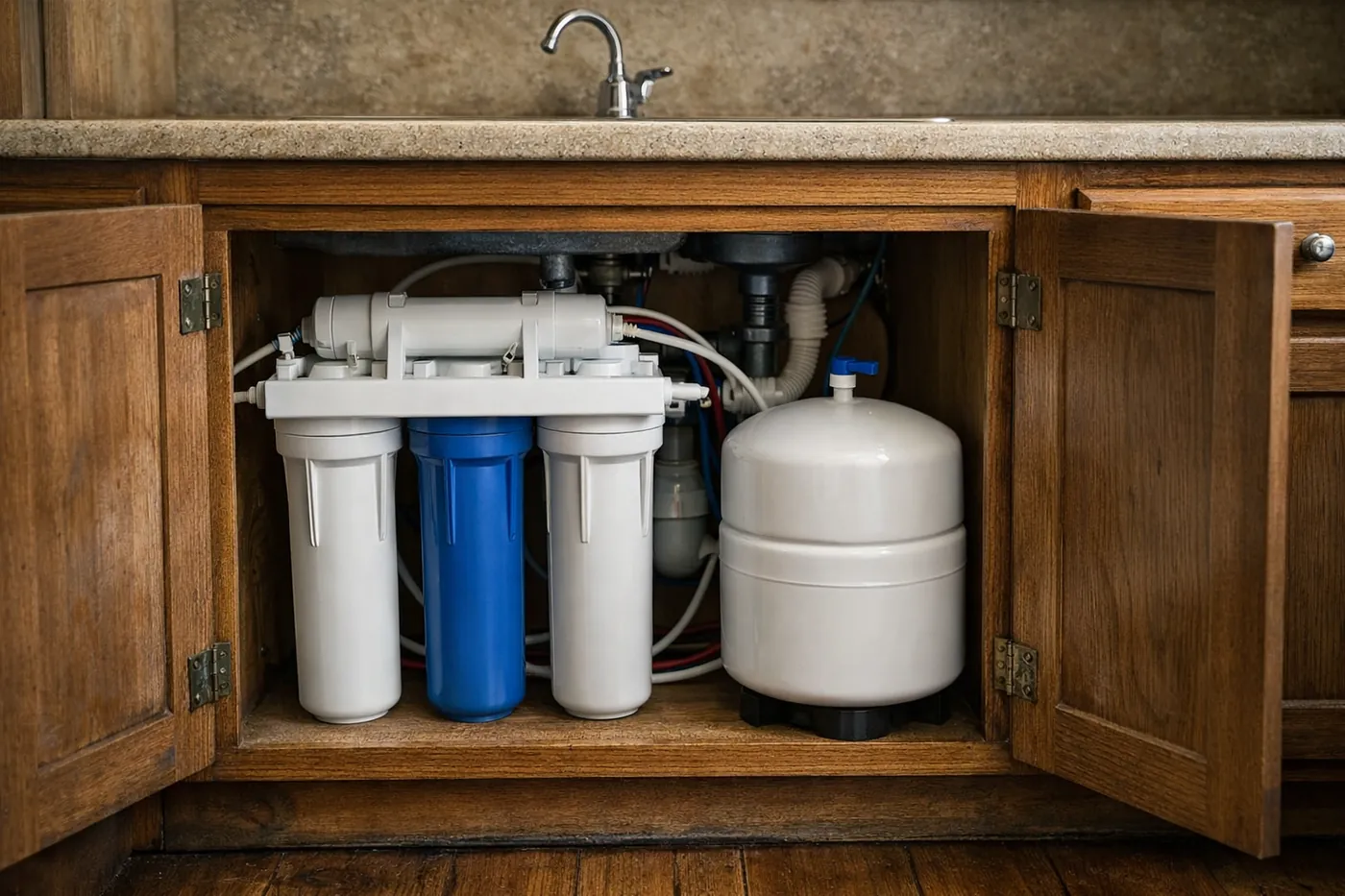
For drinking and cooking, under-sink reverse osmosis covers the need at one tap: $300–$700 with a tank and $450–$950 tankless in HomeGuide's 2025 guide. Whole-house RO, at $4,800–$8,000 in HomeGuide's reverse osmosis guide, is a large system with a storage tank and pump, rarely needed on city water. Filters and membranes need changing on schedule. Compare all options in the Minneapolis water softener and filter cost guide.
Questions homeowners ask
Will a softener remove chloramine or lead from Minneapolis water?
No. A softener exchanges calcium and magnesium for sodium or potassium; it is not built for disinfectant or lead. The city's 2025 Water Quality Report recommends a filter certified to NSF/ANSI 53 and 42 if a lead test stays high after flushing, and a carbon filter rated for chloramine handles the taste.
What is your water doing?
A sentence is plenty: a softener that runs out of salt too fast, spots that will not go away, a private well, a taste you do not like. One independent water treatment specialist who works in Minneapolis will get in touch.