Installing a Water Softener in Minneapolis: Rules, Lines and Settings
Water softener installation in Minneapolis is shaped by two facts: Minnesota licenses the work, and the city's water arrives already partly softened. Both change how a good install looks.
Paid water softener installation in Minnesota needs a water conditioning contractor's license and a licensed installer or plumber (Minn. Stat. 326B.55); owner-occupants may do their own home to state standards. Keep an air gap at the drain. HomeGuide (2025) puts a salt-based unit at $1,200–$3,800 installed.
Who may install a water softener in Minnesota?
State law calls softener work water conditioning installation: putting in equipment that alters the mineral, chemical or bacterial content of water (Minn. Stat. 326B.50). Under Minn. Stat. 326B.55, nobody may offer that work to others without a water conditioning contractor's license, and the person doing it needs a water conditioning or plumbing license. Two exemptions matter to homeowners: swapping portable exchange tanks, and an individual doing the work on a home they own and live in, provided it meets the state's minimum standards. Ask the installer which license they hold before they start.
How does the softener connect?
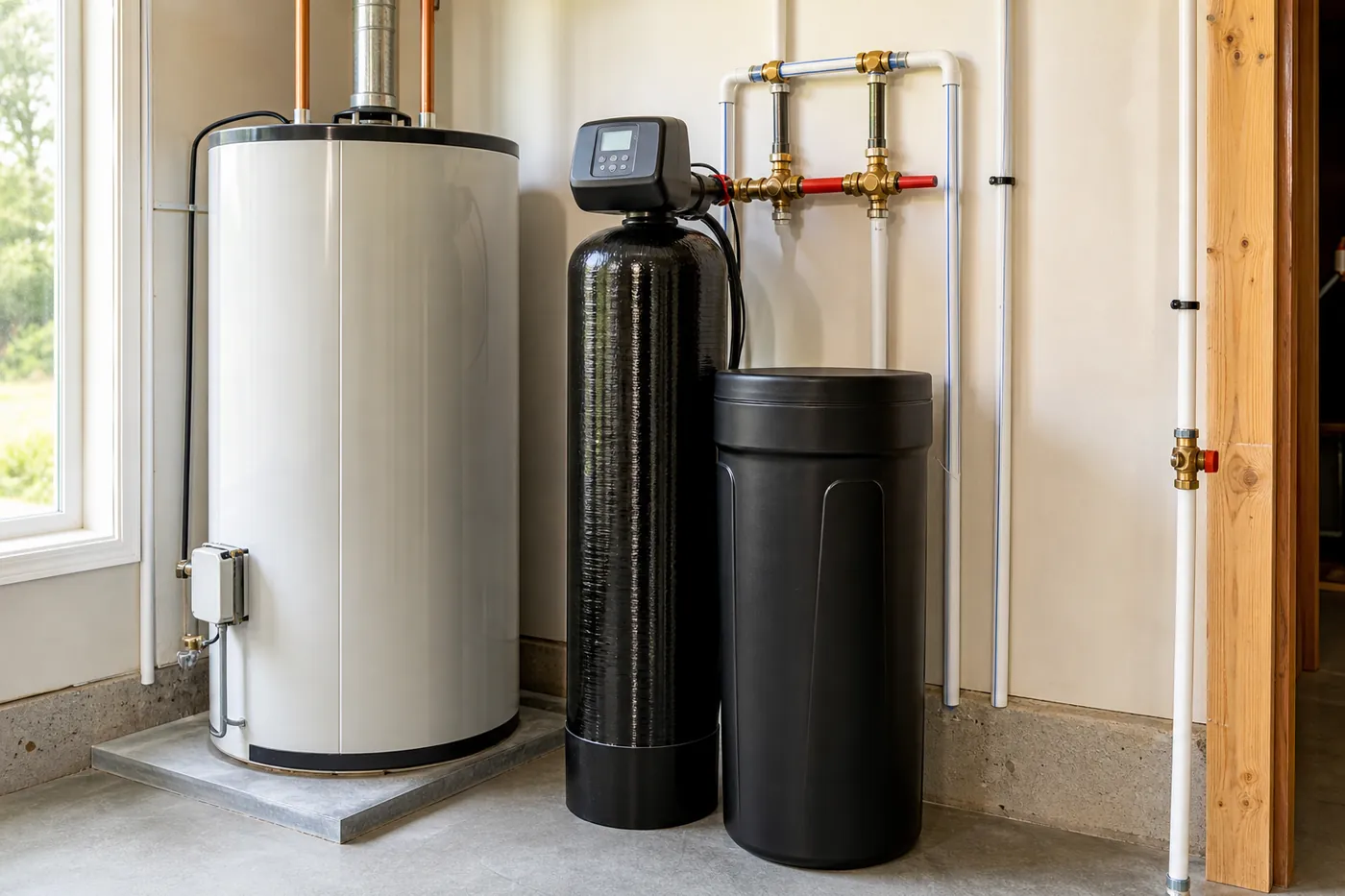
- Before the water heater. Scale forms fastest in heated water, so the heater should receive softened supply.
- A bypass. Three valves, or one built into the control head, let the softener be isolated while the rest of the plumbing keeps running.
- An air-gapped drain. Minnesota's definition of water conditioning installation excludes a direct connection to a soil or waste pipe without an air gap, so the brine line should discharge above the drain with open air between.
- Power. Most control valves need an outlet nearby; HomeGuide puts a new dedicated circuit at $250–$900.
Which lines should a Minneapolis softener feed?
Fewer than you might think. The Minnesota Department of Health says to soften only what you need: showers, sinks and laundry hookups are the usual choices, while toilets, hose bibs, basement sinks and other cold taps typically do not need softened water. On city water averaging about 5.5 grains (Minneapolis 2025 plant record), many households soften only the hot water. Keeping a cold kitchen tap unsoftened also avoids the extra sodium MDH flags for anyone with high blood pressure.
Permits, settings and new copper
Minneapolis's plumbing permit page lists water piping and water heaters among jobs that need a permit and does not mention softeners by name, so ask city permit staff whether your job needs one. On day one, the installer should set hardness from a test of your tap, not a default. MDH adds a point most people miss: in a house with new copper plumbing, do not run the softener for the first few weeks, so the pipes can form a protective mineral layer. Prices for each step are in the Minneapolis water softener cost guide.
Questions homeowners ask
Can I install my own water softener in Minneapolis?
Minnesota's statute exempts an individual doing water conditioning work on a home they own and live in, as long as it meets the state's minimum standards (Minn. Stat. 326B.55). Ask Minneapolis permit staff whether a permit applies, keep an air gap at the drain, and set the hardness to your own water rather than the factory default.
What is your water doing?
A sentence is plenty: a softener that runs out of salt too fast, spots that will not go away, a private well, a taste you do not like. One independent water treatment specialist who works in Minneapolis will get in touch.